Back to the Roots: My Thesis on Shortest Path Algorithms

Every senior engineer has a starting point. For me, the bridge between academic theory and real-world engineering was built during my Bachelor’s degree at the Università degli Studi della Campania “Luigi Vanvitelli”.
I am sharing my Engineering Thesis titled: “Shortest path algorithms with a multimodal case study”.
The Context: Waynaut & Multimodality
This work wasn’t just theoretical. It was deeply connected to my first professional experience at Waynaut (later acquired by lastminute.com). The challenge was fascinating: how do you calculate the optimal route between two points when the “graph” isn’t just roads, but a complex mix of trains, flights, carpooling, and buses?
What’s inside?
In this paper, I explore the mathematical foundations that power modern travel search engines:
- Graph Theory Fundamentals: How to model real-world locations as nodes and transport connections as weighted edges.
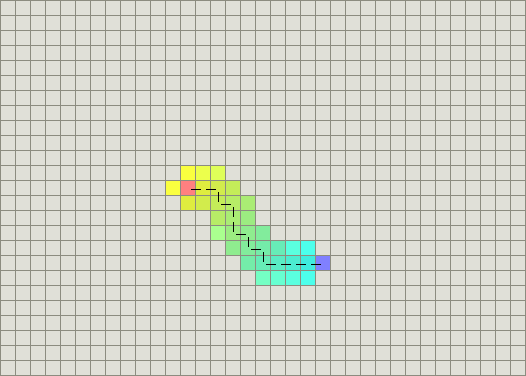
- The Algorithms: A comparative analysis of Dijkstra, Bellman-Ford, and A* (A-Star).
- The “Agony” Metric: How we weighted edges not just by price or duration, but by “agony” (a combination of wait times, number of transfers, and comfort).
- Real-world Application: How the A* Algorithm was tailored with specific heuristics (Manhattan, Euclidean, Diagonal distances) to power the Wayfinder engine.
If you are interested in Graph Theory, backend algorithms, or just want to see how a “young me” tackled these problems, feel free to download the full document below.
📄 Download the Thesis
Note: The thesis is written in Italian, but the algorithms and math speak the universal language of code.